How Digital Cutting and Automated Material Handling Are Transforming Belt Manufacturing
Today’s conveyor belting manufacturers face increasing pressure to improve throughput while maintaining exceptional quality. Whether producing lightweight food-grade belts or heavy-duty industrial conveyor systems, success depends on more than individual machines. It requires an efficient converting process that reduces waste, improves consistency, and adapts quickly to changing production demands.
Rather than relying on standalone equipment, many manufacturers are investing in integrated converting lines designed around their specific production needs.
Production Line 1: Unwinding + Digital Knife Cutting + Rewinding
Precision Starts with the Right Cut
For many manufacturers, cutting is where quality is won or lost.
Traditional cutting methods often require dedicated tooling, lengthy setup times, and can limit flexibility when production requirements change. Digital CNC knife cutting eliminates the need for hard tooling while delivering highly accurate parts across a wide range of conveyor belt materials.
Benefits include:
- Higher material utilization through optimized nesting
- Faster changeovers between jobs
- Consistent part accuracy
- Reduced tooling costs
- Easier prototyping and short-to-medium production runs
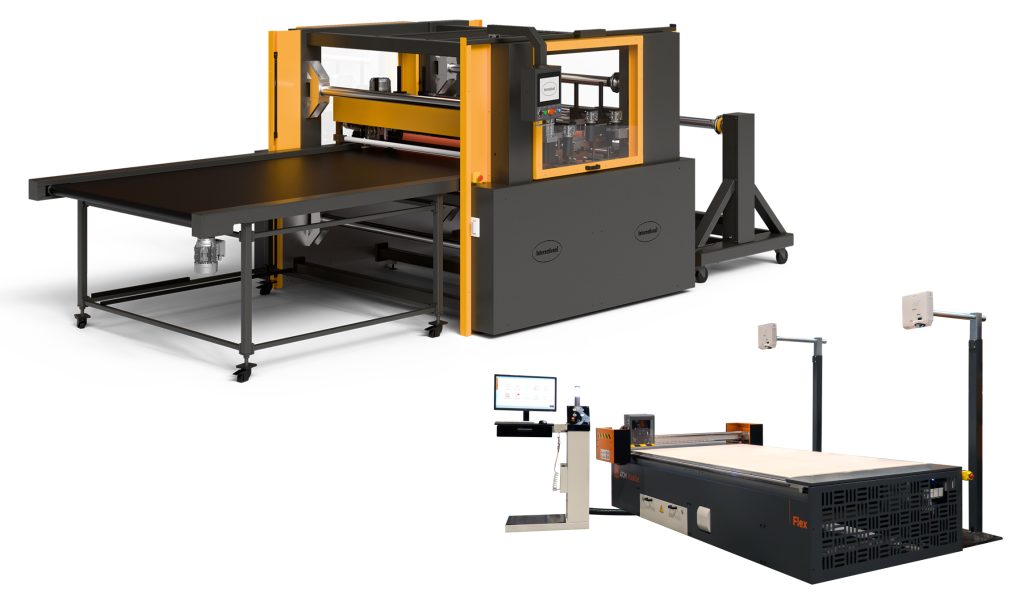
Integrated with an unwinder and rewinder, ATOM FlashCut systems create an efficient workflow that minimizes material handling while improving production flexibility.
Production Line 2: Unwinding + Slitting + Sheeting + Rewinding
Accurate Material Processing from Roll to Finished Product
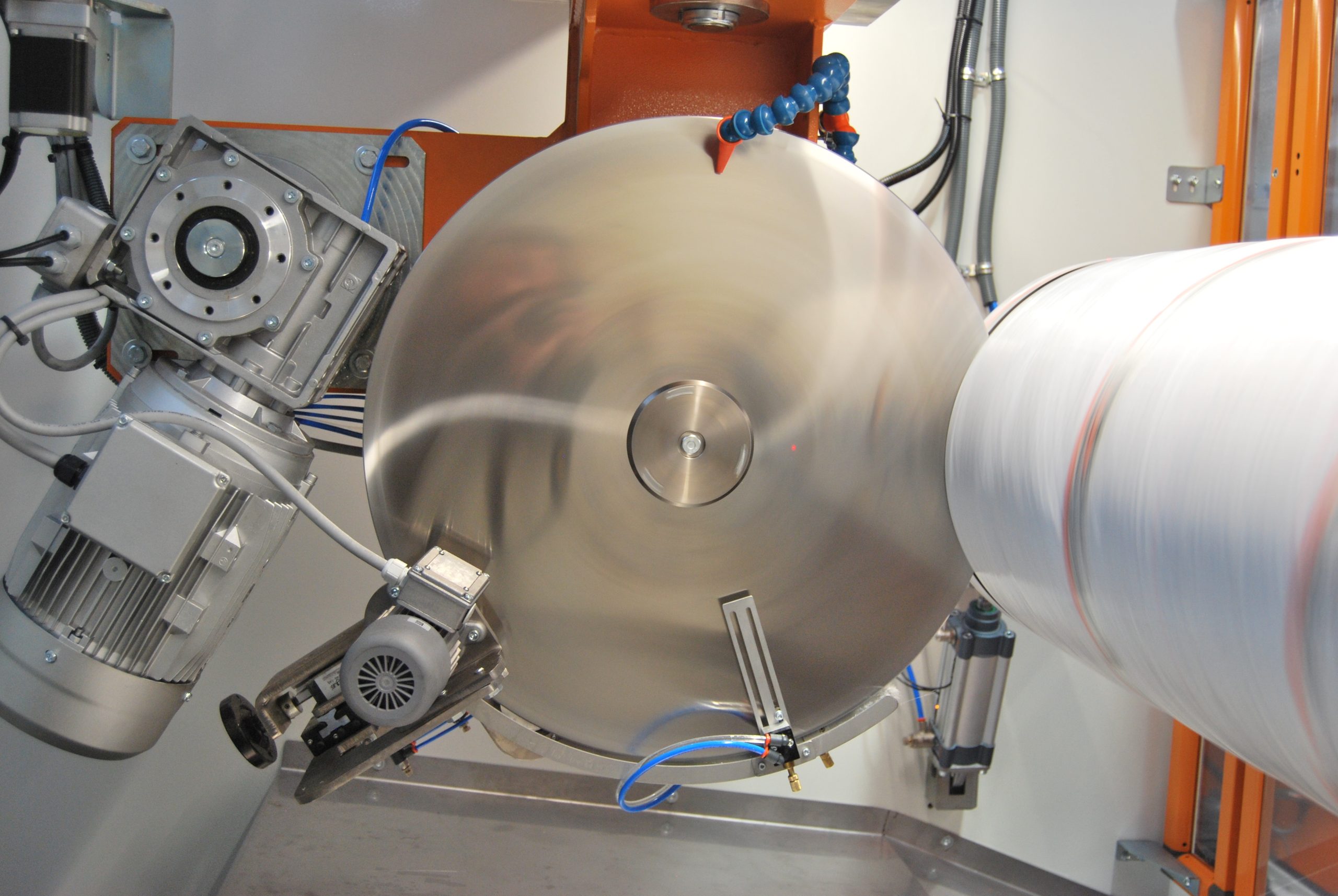
Many conveyor belt manufacturers also need to slit wide master rolls into narrower widths or convert roll stock into finished sheets before additional processing.
By integrating unwinding, slitting, sheeting, and rewinding into one production line, manufacturers can improve material control while reducing manual handling throughout the converting process.
Benefits include:
- Accurate longitudinal slitting
- Consistent sheet lengths
- Controlled web tension
- Reliable material tracking
- Continuous production with rewinding
International Machinery’s modular systems allow manufacturers to configure converting lines around their material, production requirements, and future expansion plans.
Modular Production Creates Long-Term Flexibility
Production requirements change. Materials evolve. Products expand. Customer demands increase.
Rather than replacing an entire production line, many manufacturers are choosing modular systems that can grow alongside their business.
Whether adding additional unwinding stations, slitting units, sheeting capabilities, rewinding systems, or inspection technologies, modular equipment provides the flexibility to adapt as production needs change.
Building a Smarter Converting Process
The most efficient conveyor belt manufacturers don’t look at cutting, slitting, sheeting, and material handling as isolated operations.
Instead, they focus on creating streamlined workflows that improve efficiency from the moment a roll enters production until the finished product is complete.
Whether the application requires unwinding → FlashCut → rewinding, or unwinding → slitting → sheeting → rewinding, integrated converting systems help manufacturers achieve:
- Less material waste
- Reduced manual handling
- Higher throughput
- Improved consistency
- Greater production flexibility
Why It Matters
The future of conveyor belt manufacturing isn’t about buying another machine.
It’s about building a smarter converting process.
Whether improving digital cutting or optimizing roll handling, manufacturers are investing in integrated production lines that increase efficiency today while providing the flexibility to support tomorrow’s production demands.
Build a Smarter Conveyor Belt Converting Process
Explore how ATOM FlashCut digital cutting systems and International slitting, sheeting, unwinding, and rewinding solutions can help improve efficiency, material utilization, and production flexibility.